All About Proteins: Plant vs Animal Sources, Complete vs Incomplete Proteins

Updated: Aug 23
Proteins and its importance
Protein is an indispensable nutrient for good health. No life exists without proteins. Its name was aptly derived from a Greek word Proteos, "meaning primary" or "taking first place".
All the basic functions of life depends on proteins. In fact there is no physiological function in which they do not participate.
Building blocks of our body
Each and every cell of our body is made of proteins. From muscles, bone, teeth, skin, tendons, cartilage, blood vessels to hair, and nails everything is made of amino acids.
Catalysts
Thousands of biochemical reactions that take place in our body needs enzymes and enzymes are proteins. Even to digest the food we eat we need digestive enzymes like lactase, sucrase, amylase etc.
Messengers
Hormones and neurotransmitters are also proteins. They act as chemical messengers in our body. Hence proteins are not only essential for brain functions but also for the functions of other organs in our body.
Buffers
Proteins, because of their constituent amino acids, can serve as buffers in the body and thus help to regulate acid-base balance. Blood pH ranges from about 7.35 to 7.45, whereas cellular pH levels are often more acidic.
The protein hemoglobin, for example, functions as a buffer in red blood cells.
Fluid balancers
Proteins influence fluid balance through their presence in the blood and in cells, helping attract and keep water inside a particular area. When protein concentrations in the blood are less dense than normal, fluid leaks out of the blood and into interstitial spaces causing swelling.
Immunoprotectors
Protein is essential for immune function too. Immune cells that protect us from disease — cytokines, macrophages, neutrophils, immunoglobulins — are all made of proteins.
Transporters and energy providers
Proteins also transport substances like vitamins and minerals within the blood and into or out of cells — hemoglobin, for example, transports oxygen and carbon dioxide. Protein can also provide energy: 1 gram gives 4 calories, though the body only uses protein for energy during long fasting, strenuous exercise, or very low calorie intake.
Essential vs non-essential amino acids
Proteins are made of 20 amino acids, classified by whether the body can synthesize them. 11 are non-essential — produced inside the body — though under stress, illness or injury the body can fail to produce some in adequate amounts, making them conditionally essential. The remaining 9 are essential amino acids: they cannot be synthesized by the body and must come from diet.
Complete vs incomplete protein
When all 9 essential amino acids are present in adequate quantity, a protein source is considered complete (high quality). If one or more is lacking or too low, it's an incomplete protein (lower quality).
Plant vs animal proteins
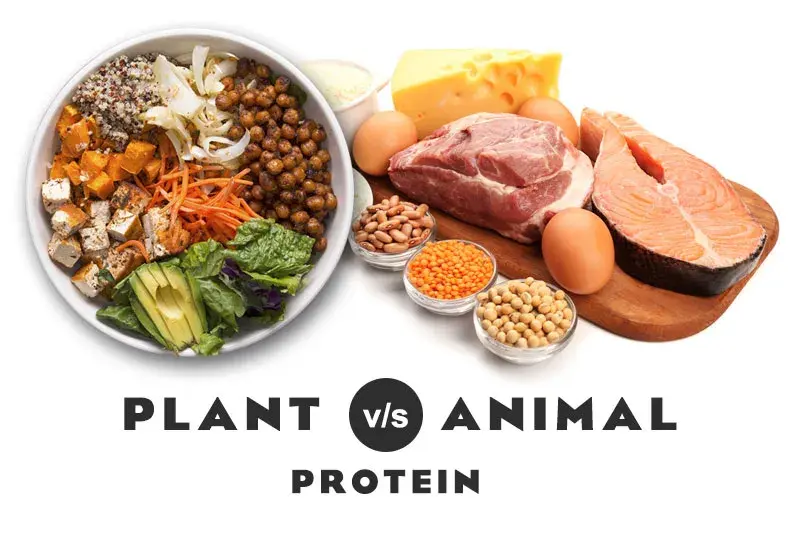
Animal sources — milk, yogurt, cheese, eggs, meat, fish, poultry — are usually complete proteins. Plant sources like cereals, legumes and grains usually lack one or more essential amino acids, making them incomplete. Nearly-complete plant proteins include quinoa, soy products (tofu, tempeh, edamame), buckwheat, hemp, chia seed, spirulina and amaranth.
Recommended intake
A healthy adult needs about 0.83 grams of protein per kg of body weight per day. Adults over 60 need more — 1 to 1.5 grams per kg — to preserve muscle mass. Dividing your total daily protein target across each meal is a practical way to hit it consistently.
Getting all essential amino acids from a plant-based diet
People eating animal-based foods usually get all essential amino acids if they hit their daily protein target. Vegetarians who include eggs and dairy can too. Those eating only plant-based foods should be more deliberate, since plant proteins are both incomplete and less digestible — but pairing foods, known as mutual supplementation, solves this easily. Pairing cereals with legumes and pulses works well, since legumes are high in lysine but low in methionine and cystine, while cereals are the opposite. Pairing soy products with seeds and nuts works the same way.
Take away
Protein is crucial for good health, with adult needs around 0.83 g/kg body weight (more for older adults). The 9 essential amino acids must come from diet, and while animal-based eaters usually meet their needs easily, plant-based eaters benefit from deliberately pairing foods — like grains with legumes, or soy with nuts and seeds — to cover the full amino acid profile.
Written by Sangeetha Duraiswamy, B.P.T., C.S.P.T., M.I.A.P., M.B.A. (HRM), M.Sc. (Diet and Food Service Management). This article is for general educational purposes and does not constitute medical advice.


Comments